
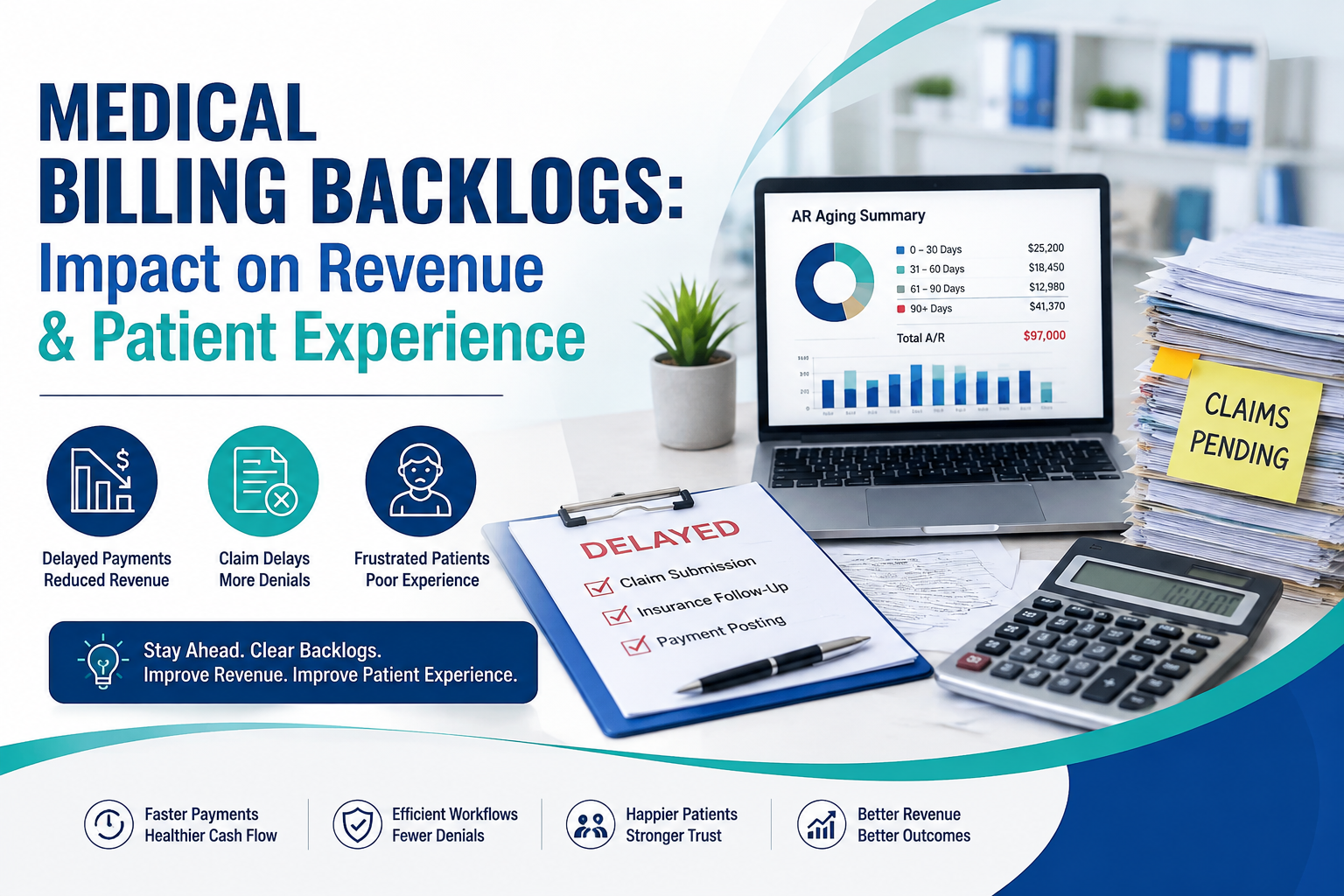
Medical billing is one of the most important administrative processes in a healthcare practice. When claims are processed and submitted on time, practices can maintain healthier cash flow, reduce accounts receivable, and provide patients with a smoother financial experience.
But when billing work begins to pile up, even a small backlog can create problems across the entire revenue cycle.
A billing backlog occurs when claims, coding tasks, payment posting, denial follow-ups, patient statements, or other billing activities remain incomplete for longer than expected. Over time, these delays can slow reimbursement, increase administrative workload, and create frustration for both staff and patients.
Healthcare revenue cycle management extends from patient registration and insurance verification through claim submission, reimbursement, statements, and final payment.
What Causes Medical Billing Backlogs?
Billing backlogs can develop for many reasons. Some are related to staffing, while others result from inefficient workflows or problems earlier in the revenue cycle.
Common causes include:
- Insufficient billing staff
- High claim volumes
- Delayed medical documentation
- Coding errors or incomplete charts
- Unresolved claim rejections
- Increasing claim denials
- Delayed payment posting
- Manual billing processes
- Insurance verification issues
- Poor communication between clinical and billing teams
- Lack of effective workflow monitoring
- Staff turnover or inadequate training
When one stage of the billing process slows down, it can create a ripple effect throughout the rest of the revenue cycle.
For example, a delayed chart can prevent coding. Delayed coding can prevent claim submission. A delayed claim can postpone reimbursement. If the claim is eventually denied, additional time and staff resources are required to correct and resubmit it.
How Billing Backlogs Affect Practice Revenue
1. Delayed Claims Mean Delayed Payments
The most immediate financial impact of a billing backlog is delayed reimbursement.
When claims remain unsubmitted or unresolved, the practice has already provided the healthcare service but has not yet received payment for it.
This can increase accounts receivable and make it harder for practice leaders to maintain predictable cash flow.
The American Medical Association recommends closely monitoring revenue-cycle metrics such as first-pass resolution and days in accounts receivable because delays in the claims process can directly affect practice finances.
2. Backlogs Can Increase A/R Days
A growing billing backlog often contributes to higher accounts receivable days.
The longer claims remain outstanding, the longer the practice must wait to collect money it has already earned.
A healthy RCM process should identify aging claims early and prioritize accounts that require immediate attention. Practices should regularly review A/R aging reports to identify whether delays are isolated or becoming a broader operational problem.
3. More Denials and Rework
Backlogs can also increase the likelihood that claims are submitted late or without adequate review.
A claim containing missing information, incorrect coding, authorization problems, or other errors may be rejected or denied. That creates additional work because staff must investigate the issue, correct the claim, and resubmit or appeal it.
Recent HFMA reporting notes that increasing denial rates can slow provider cash flow and increase the resources required to recover payment.
4. Increased Administrative Costs
A backlog does not simply represent unpaid revenue. It also consumes employee time.
Billing teams may have to spend hours working through old claims instead of handling current accounts, monitoring new submissions, or improving revenue-cycle processes.
This creates a cycle:
Backlog → More Work → Delayed Claims → More A/R → More Follow-Up → Larger Backlog
Breaking this cycle requires a structured workflow and consistent monitoring.
How Billing Backlogs Affect Patients
The financial impact is only one side of the problem. Billing delays can also affect how patients perceive their overall healthcare experience.
1. Confusing or Delayed Statements
Patients expect understandable and timely information about what they owe.
When billing processes are delayed, statements may arrive much later than expected. Patients may have difficulty remembering the visit, understanding insurance adjustments, or determining why a balance is due.
The AMA notes that clear communication about healthcare costs can improve trust and support smoother collections.
2. Increased Patient Frustration
Patients may contact the practice when they receive unexpected bills or cannot get answers about their insurance claim.
If billing staff are already overwhelmed by a backlog, response times can become longer.
This can create frustration for patients and additional pressure on front-desk and administrative employees.
3. Reduced Trust
Billing is part of the overall patient experience.
Patients may not separate the billing department from the healthcare organization itself. If they repeatedly experience delayed statements, unexplained balances, or difficulty getting answers, their perception of the practice can suffer.
HFMA emphasizes that the revenue cycle is closely connected to patient experience because patients interact with financial processes throughout their healthcare journey.
4. Delayed Financial Assistance
When billing information is not processed promptly, patients may also experience delays in understanding their financial responsibility or determining whether payment arrangements are available.
Clear, timely communication can help patients make informed decisions and avoid unnecessary confusion.
Warning Signs Your Practice Has a Billing Backlog
Practice leaders should watch for warning signs such as:
- Increasing A/R days
- Large numbers of unsubmitted claims
- Growing volumes of rejected claims
- Claims sitting in work queues for extended periods
- Increasing denial rates
- Delayed payment posting
- Patient complaints about billing
- Increasing billing-related phone calls
- Staff working overtime to catch up
- Large numbers of aging accounts
- Declining clean claim rates
- Difficulty keeping up with current claims
A backlog should not be viewed as simply a billing department problem. It can indicate weaknesses across the entire revenue cycle.
7 Ways to Reduce Medical Billing Backlogs
1. Monitor Claims From Submission to Payment
Don’t wait until accounts become seriously overdue.
Track claims throughout the process and identify those that are rejected, denied, pending, or otherwise delayed.
2. Prioritize Aging A/R
Not every account requires the same level of attention.
Create a systematic approach to prioritize older and higher-value accounts while maintaining consistent follow-up on outstanding claims.
3. Improve Front-End Processes
Many billing problems begin before a claim is ever created.
Accurate patient demographics, insurance verification, authorization checks, and complete registration information can help prevent avoidable problems later in the cycle.
4. Strengthen Coding and Documentation
Incomplete documentation and coding errors can delay claims and increase rework.
Encourage effective communication between providers, clinical staff, coders, and billers so potential problems can be addressed before claims are submitted.
5. Automate Repetitive Tasks
Technology can reduce the amount of manual work required for eligibility verification, claim submission, claim tracking, payment posting, and reporting.
The AMA recommends using available automation and electronic processes to improve RCM efficiency and reduce administrative workload.
6. Track Key RCM Metrics
Practice leaders should regularly monitor metrics such as:
- Days in A/R
- Clean claim rate
- First-pass resolution rate
- Denial rate
- Net collection rate
- Claim submission turnaround time
- Payment posting turnaround time
- Aging A/R
- Patient collection rate
These metrics can reveal problems before they become major backlogs.
7. Consider Professional RCM Support
For practices that consistently struggle with billing volume, staffing, denials, or A/R follow-up, professional revenue cycle management support can provide additional expertise and capacity.
An experienced RCM partner can help practices organize workflows, monitor claims, identify revenue leakage, and keep billing activities moving consistently.
The Bottom Line
A medical billing backlog is more than an administrative inconvenience. It can delay revenue, increase A/R, create additional staff workload, and make it harder for practices to maintain financial stability.
At the same time, billing delays can affect the patient experience by creating confusion, frustration, and uncertainty around healthcare costs.
The solution is to treat billing as an essential part of the overall patient and revenue cycle—not as a task that can simply wait until staff have more time.
By improving front-end processes, monitoring claims, reducing denials, automating repetitive work, tracking RCM performance, and addressing aging accounts proactively, medical practices can reduce billing backlogs and create a more efficient financial experience for everyone.
A healthier revenue cycle means faster payments, less administrative stress, and a better experience for your patients.
How USRCM Can Help
Managing medical billing efficiently requires consistent attention at every stage of the revenue cycle. USRCM helps medical practices streamline billing operations, improve claim management, reduce revenue-cycle inefficiencies, and strengthen overall financial performance.
If your practice is struggling with billing backlogs, growing A/R, or an overloaded billing team, professional RCM support can help you get your revenue cycle back on track.


