
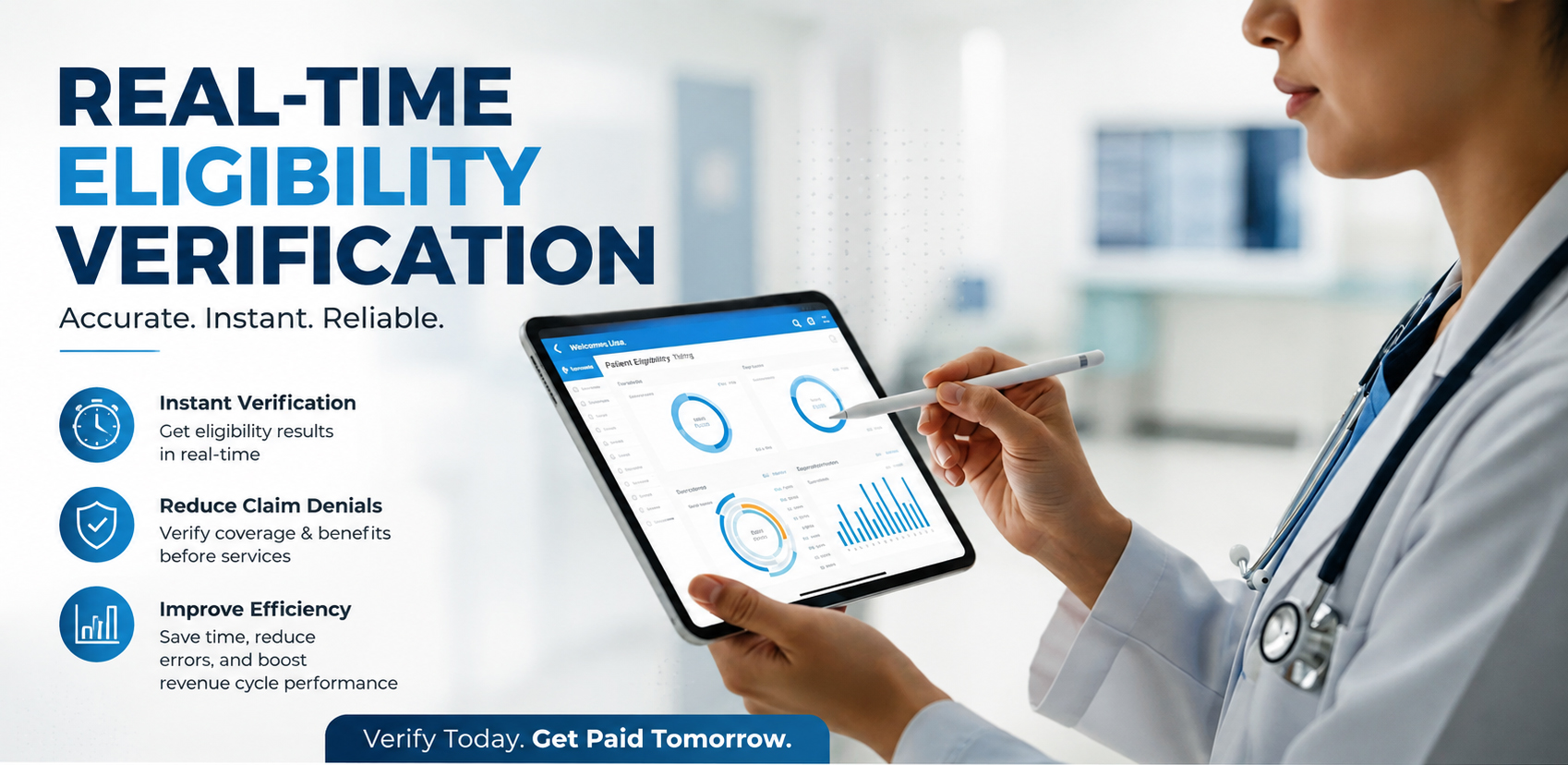
Real-time insurance eligibility verification is an essential part of an efficient healthcare revenue cycle. When providers verify a patient’s insurance coverage, benefits, copay, deductible, coinsurance, and authorization requirements before the appointment, they can reduce unexpected billing issues and improve upfront collections.
1. Know Patient Financial Responsibility in Advance
Real-time eligibility verification helps practices determine what patients are likely to owe before services are provided. Staff can identify:
- Copay requirements
- Deductible status
- Coinsurance
- Coverage limitations
- In-network or out-of-network status
- Benefit exclusions
This allows the practice to communicate expected costs clearly and collect appropriate amounts earlier.
2. Reduce Eligibility-Related Claim Denials
Inactive coverage and incorrect insurance information are common causes of claim problems. Verifying coverage before the visit gives staff an opportunity to identify outdated or inactive policies and correct the information before submitting a claim.
Fewer preventable denials mean less rework, faster reimbursement, and a healthier A/R balance.
3. Improve Upfront Patient Collections
Collecting patient responsibility at or before the time of service is generally more efficient than sending statements after the visit. With accurate eligibility information, front-desk teams can have more informed conversations with patients about their expected financial responsibility.
4. Prevent Surprise Billing Issues
Patients are more likely to understand their financial responsibility when the practice explains expected costs in advance. This can reduce confusion and disputes after services are delivered.
Clear communication can also improve the overall patient experience while supporting more consistent collections.
5. Reduce Administrative Work
Manual eligibility checks can consume significant staff time. Real-time verification can streamline the process by allowing staff to access insurance information more efficiently and focus on higher-value revenue cycle tasks.
6. Improve Clean Claim Performance
Eligibility verification is an important front-end RCM process. By confirming insurance information before claims are submitted, practices can reduce errors that might otherwise create downstream billing problems.
The result is a more predictable revenue cycle with fewer avoidable delays.
7. Strengthen Cash Flow
The combination of accurate insurance information, better upfront collections, fewer eligibility-related denials, and faster claim processing can contribute to stronger practice cash flow.
For growing practices, even small improvements across hundreds or thousands of patient encounters can have a meaningful financial impact.
Why Outsource Eligibility Verification?
Managing eligibility verification internally can become challenging as patient volume increases. A professional medical billing and RCM partner can help practices establish consistent verification workflows while reducing administrative pressure on in-house staff.
USRCM provides eligibility verification and revenue cycle management solutions designed to help healthcare organizations improve billing efficiency and reduce preventable revenue loss.
Final Takeaway
Real-time eligibility verification is more than an administrative task—it is a revenue protection strategy. By identifying coverage details and patient responsibility before services are provided, medical practices can improve upfront collections, reduce avoidable denials, minimize billing surprises, and create a more efficient revenue cycle.
Want to improve your practice’s collections? A professional eligibility verification and RCM strategy can help identify opportunities to strengthen your revenue cycle and reduce unnecessary billing losses.


