
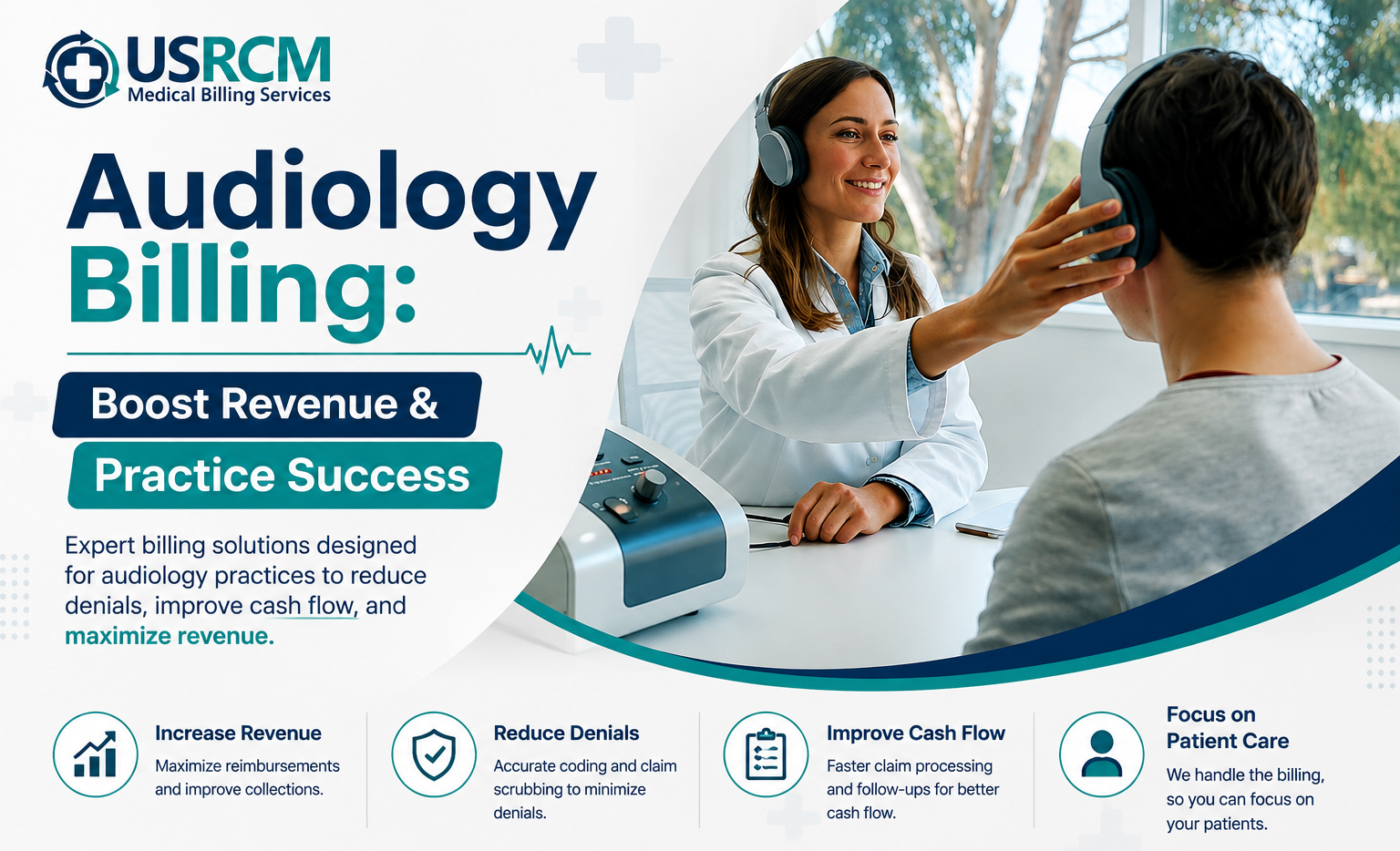
Audiology practices provide essential services that help patients improve their hearing, communication, and overall quality of life. But while audiologists focus on patient care, managing the financial side of the practice can be challenging. Audiology billing involves detailed coding, insurance verification, claim submission, payment posting, denial management, and constant payer follow-up.
Even a small billing mistake can result in delayed payments, denied claims, or lost revenue. That is why having an efficient audiology billing process is essential for maintaining a healthy revenue cycle and building a successful practice.
What Is Audiology Billing?
Audiology billing is the process of submitting and managing claims for hearing-related healthcare services provided by audiologists and hearing professionals.
The process typically includes:
- Patient registration and insurance verification
- Eligibility and benefits verification
- Accurate medical coding
- Charge entry
- Claim submission
- Claim tracking
- Payment posting
- Denial and rejection management
- Patient billing
- Accounts receivable follow-up
- Insurance appeals
Each stage must be handled accurately to prevent unnecessary delays and revenue leakage.
Why Audiology Billing Can Be Challenging
Audiology billing has its own complexities. Different insurance companies may have different coverage rules, authorization requirements, coding guidelines, and reimbursement policies.
Common challenges include:
1. Insurance Verification Issues
Before providing certain audiology services, practices need to understand a patient’s insurance coverage. Incorrect eligibility information can lead to unexpected claim denials and patient confusion.
2. Coding Errors
Incorrect CPT or ICD-10 coding can cause claims to be rejected or denied. Proper documentation and accurate code selection are critical for receiving appropriate reimbursement.
3. Claim Denials
Denied claims can significantly affect cash flow. Common causes include incorrect patient information, coding errors, missing documentation, authorization problems, and payer-specific requirements.
4. Delayed Payments
When claims are not submitted correctly or followed up on consistently, payments can take longer to arrive. Delayed reimbursements can create cash-flow problems for an audiology practice.
5. Accounts Receivable
Outstanding insurance balances require regular follow-up. Without an organized A/R process, older unpaid claims can continue to accumulate.
How Better Audiology Billing Can Increase Revenue
A well-managed billing process can help practices capture more of the revenue they have already earned.
Improve Coding Accuracy
Accurate coding helps ensure that services are represented correctly on claims. Reviewing documentation, diagnosis codes, and procedure codes before submission can reduce preventable billing errors.
Submit Clean Claims
Clean claims are more likely to move through the payer system without unnecessary delays. A strong claim-scrubbing and quality-control process can identify common errors before submission.
Manage Denials Quickly
A denial should not simply be written off. Each denial should be reviewed to determine the reason, corrected when appropriate, and resubmitted or appealed within the payer’s required timeframe.
Strengthen A/R Follow-Up
Consistent A/R follow-up helps practices identify unpaid claims before they become too old to recover. Prioritizing high-value and aging accounts can improve collections.
Verify Insurance Before Treatment
Insurance verification can help identify coverage limitations, authorization requirements, deductibles, and other patient responsibility information before services are provided.
The Role of Technology in Audiology Billing
Technology can make the billing process more efficient by helping practices organize claims, monitor accounts, track denials, and identify outstanding balances.
Modern revenue cycle workflows can provide useful information such as:
- Claim status
- Outstanding A/R
- Denial trends
- Payment patterns
- Aging accounts
- Payer performance
- Collection rates
Using this information allows practice managers to identify problems and make data-driven improvements.
Why Outsource Audiology Billing?
Managing billing internally can require significant time, staff, training, and resources. Outsourcing to an experienced medical billing company can allow audiologists and their teams to focus more on patient care.
A professional billing partner can assist with:
- Insurance verification
- Audiology coding
- Charge entry
- Electronic claim submission
- Claim follow-up
- Denial management
- Payment posting
- A/R management
- Patient statements
- Revenue cycle reporting
The goal is not simply to submit more claims. The goal is to create a complete revenue cycle strategy that helps your practice collect accurately and consistently.
How USRCM Can Help With Audiology Billing
At USRCM, we understand that successful medical billing requires more than simply submitting claims. Our revenue cycle approach focuses on improving the entire billing workflow, from patient registration and insurance verification through claim submission, denial management, and A/R follow-up.
Our team can help audiology practices identify billing inefficiencies, reduce preventable errors, improve claim follow-up, and strengthen overall revenue cycle performance.
With the right billing strategy, your practice can spend less time dealing with administrative challenges and more time focusing on patients.
Best Practices for Audiology Billing Success
To create a stronger billing process, audiology practices should:
- Verify insurance before appointments.
- Maintain accurate patient information.
- Use appropriate procedure and diagnosis codes.
- Review claims before submission.
- Monitor rejected and denied claims.
- Follow up on unpaid claims consistently.
- Track accounts receivable aging.
- Monitor payer-specific trends.
- Train billing staff regularly.
- Review revenue cycle performance using measurable KPIs.
Key Audiology Billing KPIs to Track
Measuring performance can help practices determine whether their billing process is actually improving.
Important metrics include:
- Clean claim rate
- First-pass acceptance rate
- Claim denial rate
- Days in A/R
- Net collection rate
- Gross collection rate
- A/R aging
- Payment turnaround time
- Percentage of A/R over 90 days
Regularly reviewing these metrics can reveal where revenue is being delayed or lost.
Turn Audiology Billing Into a Growth Strategy
Audiology billing should not be treated as a simple administrative task. It is an important part of your practice’s financial health.
Accurate coding, clean claims, effective denial management, timely A/R follow-up, and reliable insurance verification can help improve cash flow and reduce revenue leakage.
If billing challenges are taking time away from your audiology practice, professional audiology billing support can provide the expertise and consistency needed to strengthen your revenue cycle.
Final Thoughts
A successful audiology practice needs both excellent patient care and an efficient financial operation. By improving your billing workflow and addressing problems before they become costly, you can create a healthier revenue cycle and position your practice for long-term growth.
USRCM can help you simplify audiology billing, improve revenue cycle efficiency, and spend more time doing what matters most—providing quality care to your patients.


