
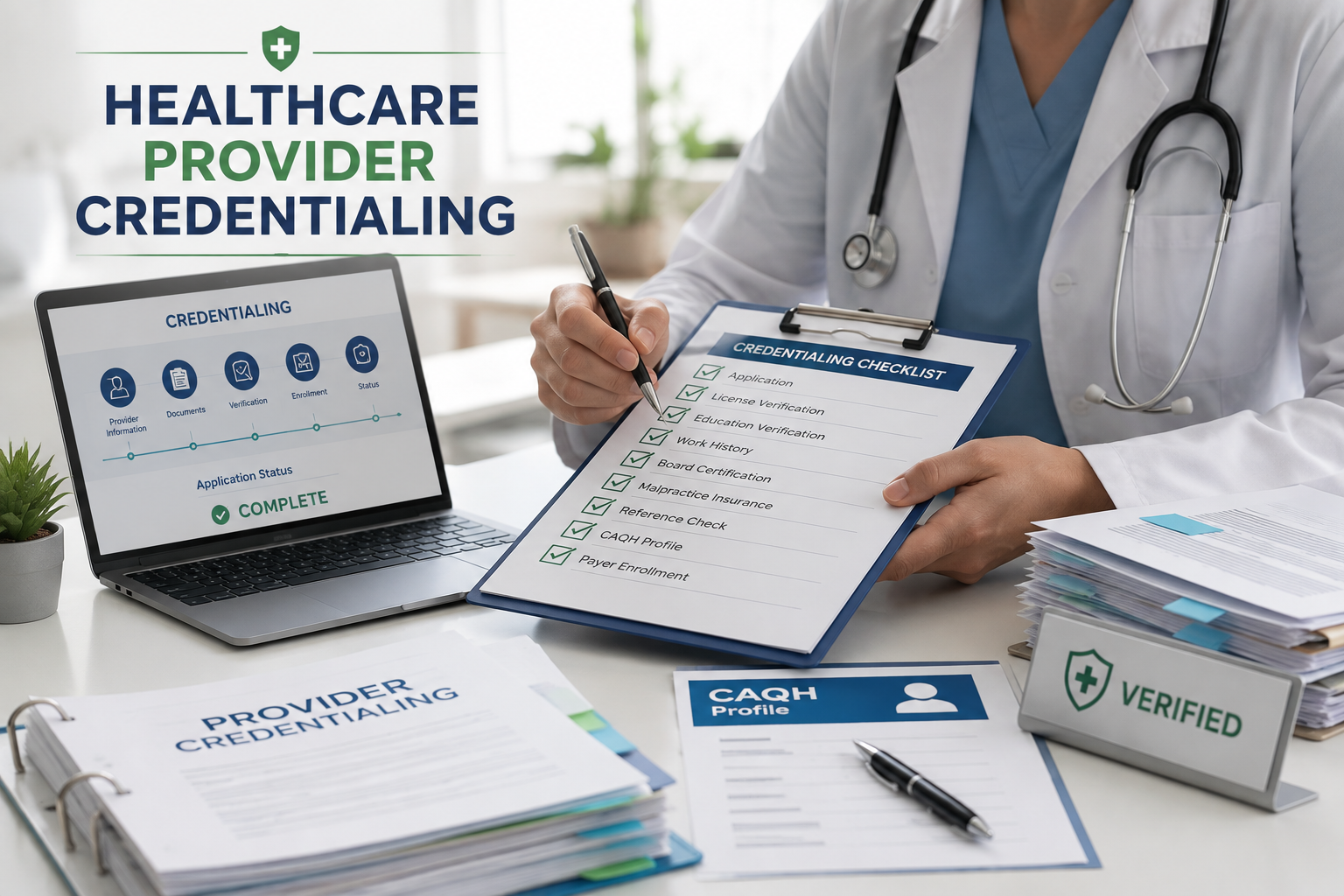
Starting a new healthcare practice is an exciting milestone, but before treating patients and billing insurance companies, providers must complete one of the most important administrative processes—provider credentialing.
Without proper credentialing, insurance companies cannot verify your qualifications, and your practice may face delayed reimbursements, denied claims, or even an inability to participate in insurance networks.
Whether you’re opening a solo practice, joining a group practice, or expanding your healthcare organization, having a structured credentialing checklist ensures a smoother and faster onboarding process.
In this guide, we’ll walk you through everything new healthcare practices need to successfully complete provider credentialing in 2026.
What Is Provider Credentialing?
Provider credentialing is the process of verifying a healthcare provider’s education, training, licenses, certifications, work history, malpractice history, and other qualifications before they can provide services under insurance plans.
Insurance companies, hospitals, and healthcare organizations use credentialing to ensure providers meet quality and compliance standards.
Once credentialing is completed, providers can move forward with payer enrollment, allowing them to bill insurance companies and receive reimbursements.
Why Credentialing Is Important
Credentialing affects every aspect of a healthcare practice.
Proper credentialing helps:
- Join insurance networks
- Receive timely reimbursements
- Reduce claim denials
- Improve compliance
- Build patient trust
- Meet payer requirements
- Avoid billing delays
- Support long-term revenue growth
Without credentialing, even the best medical practice cannot generate consistent insurance revenue.
Complete Provider Credentialing Checklist
1. Obtain an Active Medical License
Ensure every provider has:
- Active state medical license
- DEA registration (if applicable)
- Controlled substance registration
- License renewal schedule
Always verify expiration dates before beginning credentialing.
2. Obtain National Provider Identifier (NPI)
Every provider must have:
- Individual NPI (Type 1)
- Organization NPI (Type 2) if applicable
Insurance companies require NPIs during enrollment.
3. Register with CAQH
The Council for Affordable Quality Healthcare (CAQH) profile is required by many insurance carriers.
Complete:
- Personal information
- Education
- Residency
- Work history
- Practice locations
- Licenses
- Board certifications
- Professional references
Keep the profile updated regularly.
4. Verify Board Certifications
Prepare copies of:
- Specialty certifications
- Fellowship certificates
- Continuing education documentation
Insurance companies verify these independently.
5. Gather Education Documents
Collect:
- Medical school diploma
- Residency completion certificate
- Fellowship certificate
- Training verification letters
6. Prepare Work History
Document at least five years of professional history.
Include:
- Employer names
- Employment dates
- Practice locations
- Any employment gaps with explanations
7. Obtain Professional Liability Insurance
Keep copies of:
- Malpractice insurance certificate
- Coverage limits
- Claims history (if requested)
8. Verify Hospital Privileges
If applicable, include:
- Hospital affiliations
- Admitting privileges
- Surgical privileges
9. Complete Background Checks
Many payers verify:
- Criminal history
- OIG exclusions
- Medicare sanctions
- State exclusions
- NPDB reports
Resolve discrepancies before applying.
10. Prepare Tax and Business Documents
You’ll typically need:
- IRS EIN letter
- W-9
- Business license
- Articles of incorporation (if applicable)
- Practice ownership information
11. Complete Insurance Payer Enrollment
Submit applications to:
- Medicare
- Medicaid
- Commercial insurance plans
- Workers’ Compensation
- Managed care organizations
Every payer has unique requirements and timelines.
12. Verify Practice Information
Ensure consistency across all applications.
Include:
- Practice address
- Phone number
- Fax
- Office hours
- Tax ID
- Billing address
Even small inconsistencies can delay approval.
13. Prepare Banking Information
Some insurance companies require:
- EFT enrollment
- Direct deposit forms
- Bank verification
Electronic payments significantly reduce reimbursement delays.
14. Track Every Application
Create a tracking system that includes:
- Submission dates
- Assigned representatives
- Follow-up dates
- Approval status
- Missing documents
Following up regularly can significantly reduce credentialing delays.
Common Credentialing Mistakes
Many new practices experience delays because of avoidable errors.
The most common include:
- Incomplete applications
- Expired licenses
- Incorrect NPI information
- Missing malpractice insurance
- Outdated CAQH profiles
- Inconsistent addresses
- Missing signatures
- Failure to follow up with insurance companies
Preventing these mistakes saves both time and revenue.
How Long Does Credentialing Take?
Credentialing timelines vary depending on the payer.
Typical processing times are:
- Medicare: 60–120 days
- Medicaid: 30–90 days
- Commercial insurance: 60–180 days
Starting early helps prevent delays in seeing insured patients.
Benefits of Professional Credentialing Services
Managing credentialing internally can be time-consuming and overwhelming, especially for new practices.
Professional credentialing specialists help by:
- Preparing accurate applications
- Managing payer communication
- Monitoring application status
- Following up with insurance companies
- Maintaining CAQH profiles
- Preventing costly errors
- Accelerating approvals
- Reducing administrative workload
This allows providers and staff to focus more on patient care instead of paperwork.
Best Practices for Successful Credentialing
To streamline the process:
- Begin credentialing before opening your practice.
- Keep digital copies of all required documents.
- Monitor license and certification expiration dates.
- Review CAQH information quarterly.
- Respond quickly to payer requests.
- Maintain consistent practice information across all forms.
- Track every submission and follow-up.
- Partner with an experienced credentialing team for faster, more accurate processing.
Why Choose USRCM for Provider Credentialing?
At USRCM, we understand that delayed credentialing means delayed revenue.
Our experienced credentialing specialists provide comprehensive support, including:
- Provider credentialing
- Insurance payer enrollment
- CAQH profile management
- Medicare and Medicaid enrollment
- Commercial insurance credentialing
- Recredentialing services
- Ongoing credential maintenance
- Revenue cycle integration
We help healthcare providers complete the credentialing process efficiently so they can focus on delivering quality patient care while minimizing administrative delays.
Conclusion
Provider credentialing is one of the most important steps when launching a new healthcare practice. Completing each requirement accurately and on time helps ensure faster insurance approvals, fewer claim denials, and consistent revenue from the start.
By following this comprehensive credentialing checklist—or partnering with an experienced credentialing team like USRCM—you can simplify the process, avoid common mistakes, and position your practice for long-term success.


